Tuesday, 10 July 2018

Blog 109 - My Testimony

I was asked by my home church, Bray Park Community Church, if I would like to have my testimony videoed to be played during a church service. I immediately said yes as I felt God wanted me to. It was very difficult to condense my life into 500 words, and as it was I wrote 600. I pray that God will use my testimony for His purposes. This is what I said:


MY TESTIMONY

Hi, my name is Jenny Woolsey. BPCC has been my home church for a few years now and I am a part of the KYB group. I would like to share with you my faith journey. 


My story begins in 1967 when I was born with a rare craniofacial syndrome, called Crouzon syndrome. To put it simply, the bones in my skull and face stopped growing too early giving me an unusual appearance. 

I was a shock to my parents but loved and wanted. As a baby I underwent life-saving skull surgeries. Growing up I had friends and was happy, but my childhood was hard. Looking different meant dealing with prejudices, constant stares and comments, and physical and verbal bullying. I also had a lot of medical appointments. We attended church and I enjoyed going to Sunday School where I learnt that Jesus loved me and I was special. (My favourite song was Jesus loves me this I know, for the bible tells me so...)

At the age of ten I gave my life to Jesus at a beach mission. It was a few months after I’d endured a horrific facial reconstruction where I lost a lot of eyesight resulting in a permanent vision impairment. (This would mean I would never be able to drive,) I remember vividly the happiness I immediately felt. 

High school was difficult due to bullying. Caring friends and teachers, being in the Inter School Christian Fellowship and going to youth group helped me. Even though I loved God and I knew he loved me and was with me, I struggled with anxiety and a low self-esteem. I often felt mis-understood and tried to show people that I was more than how I looked. After school finished I underwent another traumatic facial surgery, which I only got through by clinging to God and listening to Christian music. I then studied to become a primary school teacher and came to Strathpine. 

My first marriage was abusive. My husband claimed to be a Christian and we attended a few different churches around Pine Rivers. After years of domestic violence, and in the deepest black hole, and suicidal, I cried out to God for help. He answered and provided an escape route. I should have been happy, but I wasn’t. I was really angry and turned my back on him.  

It wasn’t long after my split that I met a man who protected me and loved me for who I was. Later on we recognised it was God who’d brought us together. 

We married in 2000. I became pregnant with five babies but only three were born. My first two children having my syndrome, and my third with Down syndrome and a heart defect. I struggled with more anger and post-natal depression. 

Along with teaching, my life became consumed with paediatric doctors, therapies and many surgeries. My husband and I had little support and we decided to go to church, where we found what we needed. God also drew us to himself and we both reaffirmed our faith through baptism in 2008. I decided then that I would never turn my back on God again.

The stress of family life and the classroom increased my anxiety and depression. No amount of praying before going to school would ease it. God dealt with this situation by closing the door in 2014, on my twenty-five-year career. This hit me hard and I felt lost. It was then that God brought me to Bray Park Community Church where I have found friendship and support. 

I now work part-time as a tutor. I also write children’s books, and volunteer as a DV chaplain. This allows me to care for my children and my husband whose health has declined. 

I hope in some way that I have encouraged you with your faith. God never promised us life would be easy, but he did promise that He would always be with us, helping us through the tough parts, and this I can attest to.

Photos Included for my Testimony

Me as a baby. 1967/68.
Me in kindy
After my first major facial reconstruction, and just after I’d accepted Jesus into my heart. Photo taken January 1978.
Before my final facial surgery in 1985. I was 18 years old.
Graduating with my teaching diploma. Photo taken early 1989.
My second marriage. 2000

My three children. Photos taken 2007 and 2017.


My children’s operations
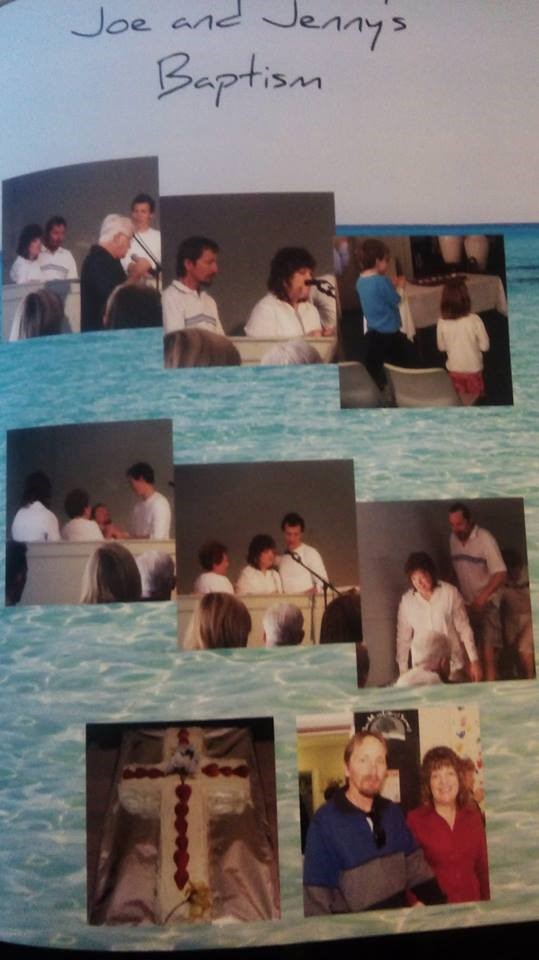
Our baptism. 2008
 
My books, 2018
    

Monday, 9 July 2018

Blog 108 - Op #10 Nick's Headaches and ICP Monitoring

Nick complained about having persistent headaches at our annual craniofacial clinic appointment in January. He said that they had been going on for a while but he hadn't said anything - he'd just been putting up with them. As he hadn't mentioned them before, the plastic surgeon noted them in his clinic notes, but nothing else was done.

Once we got home I questioned Nick about them and asked him to monitor when they were so we could try and work out what was going on. His summary was they would often start around 10.30 and be quick or last for a long time; they would sometimes start in the afternoon; he wasn't hungry or thirsty; and he wasn't anxious or stressed. He would get the headaches when he was relaxing and doing fun activities like art. He said they were usually a 4 or 5 out of 10 but were sometimes 8-9. The ophthalmologist also examined Nick's eyes and no changes were noted, so his eyesight was ruled out as a cause. The ophthalmologist contacted neurosurgery and explained the situation. They were to ring me to discuss things but I did not receive a call. We had Melissa's annual check up with the neurosurgeon a month or so later, and she was doing fine, so I used the time to speak about Nick. By this stage it had been five months since Nick had raised his concerns.

The neurosurgeon asked me some questions and came to the conclusion that it would be worth doing intracranial pressure monitoring (ICP) to see if there was raised or low pressure in his brain caused by too much or not enough cerebrospinal fluid. (If too much it could mean a shunt blockage or not enough could mean the shunt is siphoning too much csf). We knew what this was as Nick had this procedure done as a baby. This is recorded in Blog 25.
http://crouzonsdownsandme.blogspot.com/2012/08/blog-25-two-more-ops-for-nick.html

(The ICP monitoring involves the neurosurgeon drilling a small hole in the skull, and placing the probe which is a long thin wire into the brain tissue. It is attached on the outside to a monitor which records the pressure in way of numbers. These numbers are recorded once every hour, and if headaches are evident, the activity at the time and the number are recorded.)
https://www.hopkinsmedicine.org/neurology_neurosurgery/centers_clinics/cerebral-fluid/procedures/icp-monitoring-direct.html

We received Nick's surgical appointment in the mail, but the first two were cancelled due to emergency cases. We weren't too worried about this, as it had happened often at the Mater Children's Hospital. It was just good to know for awareness, that it also happened at Lady Cilento. Nick was more upset than I was. His comment was, 'Don't they care about my headaches?'

On the third attempt, which was on Tuesday of last week, the 3rd of July, Nick fasted, we arrived at the hospital, went through the usual admission procedures and then he waited to go into theatre.

When we got into the room outside the operating theatre, the anaesthetists tried to talk to Nick to distract him while one put the IV in. It didn't work as Nick answered with one-word responses. He was nervous and brave. When Nick was lying on the bed in the operating theatire, I kissed his forehead and told him I'd see him on the other side. I watched his eyes flutter as he breathed in the gas through the mask, and the 'jungle juice' as the anaesthetist called it, pulsed through his body, putting him to sleep.


I sat through the wait on my own. My husband was at home with my other two children. I had brought a book to read, and my laptop, but my head could not concentrate. A new addition to the hospital were boards which showed where the patient was. If they were in the waiting room, they were in preop, then theatre, then discharged. Nick was number 4148.


I was told the surgery would take half an hour, so after an hour I started to get antsy. At an hour and a half, my eyes were glued to the board. I prayed that everything was going okay and that I was worried for no reason.

Finally it was time to see him. I rang the button outside of the recovery room and waited for the nurse to pick up. The doors opened and I was waved over to Nick. A nurse met me excitedly and said hello. She had cared for Nick as a youngster over at the Mater Children's so she was so happy to see him again, and she revelled over how old he was. (By the time we were discharged, we had been reunited with four nurses who were from 7 South.)

Nick lay on the bed, with a dressing on his head and was groggy. Once back in the neurosurgery ward, 11A, Nick woke up and ate. He wanted sushi, so I went in search of some, which I found. His throat was sore but apart from that, he was feeling fine.

We then had the two night stay to fill in. I spent a lot of time watching the numbers on the green monitor. I knew that normal pressure was 7-15 and over 20 was a problem. I didn't know what the outcome would be.


Nick and I filled in the time by watching TV, playing Uno, napping, walking the ward, and on our mobiles. I again couldn't concentrate and gave up trying to write. Flashbacks of former surgeries would flick through my mind. Fortunately Nick had no conscious memory of any of them.


The time was pretty noneventful. Nick had two minor headaches which were quick. His pressure fluctuated from -9 through to 28. The neurosurgeon said this was fine due to his previous skull expansion surgeries, and the fact that he wasn't having high or low pressures which were prolonged in time, and with headaches. Those numbers were just Nick. (When I reread my Blog 25, I saw his ICP numbers were in the 50s when his shunt blocked as a baby.)

We enjoyed a visit from the clown doctors (#clowndoctorsaustralia). Nick didn't say a lot as he doesn't like attention, but they made me laugh which was really nice. They are well worth supporting as a chuckle is a great thing when you're in a place of stress and facing the unknown.


The outcome of the stay was that Nick did not have intracranial pressure, which was good. If he had, it would have required a further skull surgery or a shunt revision. But we did not have an answer for the headaches. It was decided that the next step would be that Nick would have a MRI to see if that showed anything. So we are now waiting for that appointment.

When the bandage came off we saw that a lot of his head had been shaved. This upset Nick as he has been growing his hair since his Lefort III when he had his mid-face advancement done in 2012. He always said it was a rebellion for having his hair shaved on multiple occasions growing up. Now it was shaved again.

Of course it is only hair, and it will grow back. But Nick was worried about teasing when he goes back to school next week. We bought him a beanie and made an appointment with our hairdresser so she could work her magic. Nick's stitches will be taken out Wednesday 11 July.

The top scar is from previous craniofacial surgeries.
After stitches were removed.


Monday, 25 June 2018

Blog 107 - Family and the Child with Disabilities


Family and the Child with Disabilities

I have been pondering over what to write about for this blog. In fact, I have probably thought about it for too long, as over a month has passed!


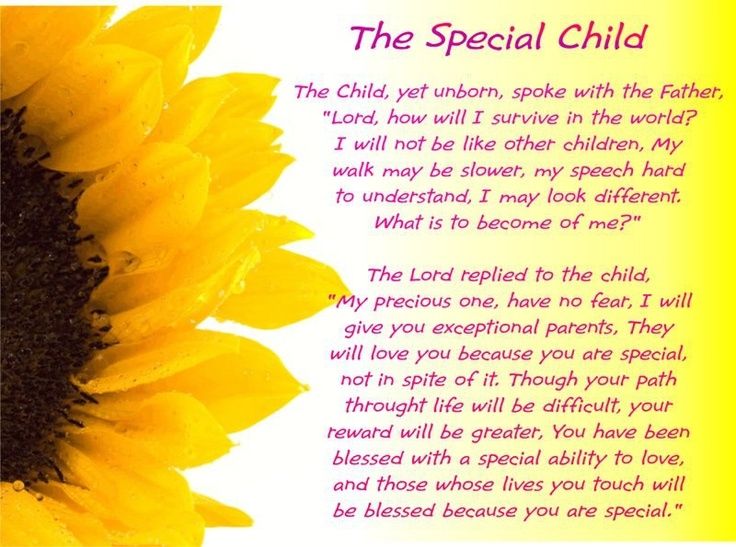
On the wall, near my bed, in between two cute hand-drawn pictures my eldest daughter had done when she was in preschool, is a photocopy of a story. It is sticky taped to the wall, and is also located under one of my wedding photos. This story is about being a mother of a child with disabilities. Yesterday I was lying on my bed, listening to some music and my attention was drawn to it. I could not remember what the story was about but knew it was important as I had taped it to the wall so I could refer to it for encouragement. The story had been there for probably twelve years or so. I had attached it to the wall after I'd given birth to my second child who was born with my craniofacial syndrome. (My first had also been born with my syndrome.) Little did I know that it wouldn't be long and I would give birth to my third child who would also have a disability... not my syndrome but one that was foreign to me and would make me see the world in a completely different way.


In 2007 my completed family would consist of four out of the five members living with a variety of impairments. This was really difficult for me to come to terms with. As a Christian, I would question  God on many an occasion, asking Him why all my children had to be born this way and even why did I have to be as well. The questioning would come swift and fast after sitting through my children's long painful surgeries and trying to help them cope with mental illness caused by their syndromes. It didn't seem fair that my children were all given significant challenges which most other children didn't have to deal with. But as a Christian, I knew God had plans for our lives and He had much love for us. There was a reason, and all would be revealed over time.

One of the reasons I know I am immersed in a life full of impairments, is to help other families. My direct experience with the range of medical issues has enabled me to circulate in many different spheres and through that, help a myriad of people. I know I have been called to care for and nurture my family, and to help other families going through similar situations.


No family on earth is identical, but those of us who have children with disabilities do have a unique perspective on the world and what is important. We don't take our children for granted and we treasure the simple things. Our perspective is valid and adds light to the darkness that exists.


Let me now share with you, the story that is taped to my wall. Before you read it, I must say that I don't like the word 'handicapped'. That word is not used in today's society:
___________________________________________________________________

God Chooses A Mom For A Disabled Child
By Erma Bombeck

Most women become mothers by accident, some by choice, a few by social pressures, and a couple by habit. This year, Nearly 100,000 women will become mothers of handicapped children. Did you ever wonder how mothers of handicapped children are chosen? Somehow I visualize God hovering over the Earth selecting his instruments for propagation with great care and deliberation. As he observes, he instructs his angels to make notes in a giant ledger.

“Armstong, Beth; son; patron saint, Matthew.

“Forrest, Marjorie; daughter; patron saint, Cecelia.

“Rudlege, Carrie; twins; patron saint…give her Gerald. He’s used to profanity.”

Finally, he passes a name to an angel and smiles, “Give her a handicapped child.”

The angel is curious. “Why this one, God? She’s so happy.”

“Exactly,” smiles God. “Could I give a handicapped child a mother who does not know laughter? That would be cruel”

“But has she patience?” asks the angel.

“I don’t want her to have too much patience or she will drown in self-pity and despair. Once the shock and resentment wears off, she’ll handle it. I watched her today. She has that feeling of self and independence. She’ll have to teach the child to live in her world and that’s not going to be easy.”

“But, Lord, I don’t think she even believes in you.”

God smiles. “No matter, I can fix that. This one is perfect. She has just enough selfishness.”

The angel gasps. “Selfishness? Is that a virtue?”

God nods. “If she can’t separate herself from the child occasionally, she’ll never survive. Yes, there is a woman I will bless with a child less than perfect. She doesn’t realize it yet, but she is to be envied. She will never take for granted a ‘spoken word.’ She will never consider a ‘step’ ordinary. When her child says ‘Momma’ for the first time, she will be present at a miracle and know it! When she describes a tree or a sunset to her blind child, she will see as few people ever see my creations.

“I will permit her to see clearly the things I see — ignorance, cruelty, prejudice — and allow her to rise above them. She will never be alone. I will be at her side every minute of every day of her life because she is doing my work as surely as she is here by my side.”

“And what about her patron saint?” asks the angel, his pen poised in mid air.
God smiles. “A mirror will suffice.”

Saturday, 28 April 2018

Blog 106 - Empathy versus Sympathy


Empathy versus Sympathy

I have a question for you. Do you know the difference between empathy and sympathy? Two very similarly spelled words. Two words that are commonly used incorrectly.

Just to clarify the difference up, we'll begin this blog post with a grammar lesson.The dictionary definition of empathy is:

  • the ability to understand and share the feelings of another.

The definition of sympathy is:

  • feelings of pity and sorrow for someone else's misfortune.

In my google search I found this quote, which I think explains the difference well:

The ability to feel sympathy for others is a great part of what makes us human, and it's what compels us to reach out and offer help. So have sympathy for people who confuse this word with empathy — they're awfully close in meaning. Feeling sympathy means you feel sorry for someone's situation, even if you've never been there yourself. Empathy is when you truly understand and can feel what another person is going through.
https://www.vocabulary.com/dictionary/sympathy


Here is another great example:

Empathy is heartbreaking — you experience other people's pain and joy. Sympathy is easier because you just have to feel sorry for someone. Send a sympathy card if someone's cat died; feel empathy if your cat died, too.
https://www.vocabulary.com/articles/chooseyourwords/empathy-sympathy/


So why am I focussing on this topic? My blog is titled, Crouzons, Downs and Me...Love and Life. This title does not truly capture the whole realm of my existence. I roam in so many different circles in the world in a medical sense and a family sense, that I understand what many people are going through.

I can't just give my attention to one cause, as many people are able to do, because I do deal with a multitude of issues. For example, Crouzon syndrome (craniofacial syndrome), hydrocephalus, Chiari malformation (spinal issues), Down syndrome, heart defect, mental illness, bullying, domestic violence, inclusive education, Coeliac disease, visual impairment, osteoarthritis, multiple miscarriages, financial difficulties, family dysfunction. .. and if I keep thinking there would be more. I often joke that I don't live in this world, my body is here but I actually reside in my alternate universe. I say this as I often feel alien to what other 'normal' people go through.

People from all over the world message me about their situations, and I know why. I take the time to listen to them and share my walk with them. I offer advice if they request it. People know that I do truly understand what they are going through. I have an arrow in my back, just like they do!


So what if you want to feel empathy but you haven't experienced what someone else is going through? I genuinely think it is possible. Maybe you have been through a similar situation, or someone else you know has, or you have been through something that had a similar outcome. For example, someone may have lost their job and had to sell their house. That may not have happened to you, but you've had financial difficulties where you've had to watch every cent and you feared to lose your house.  Maybe you know someone going through IVF. and has miscarried. Now you may not have gone through IVF, but you know how hard the process is, and you yourself have miscarried and know the grief that comes with losing your baby.

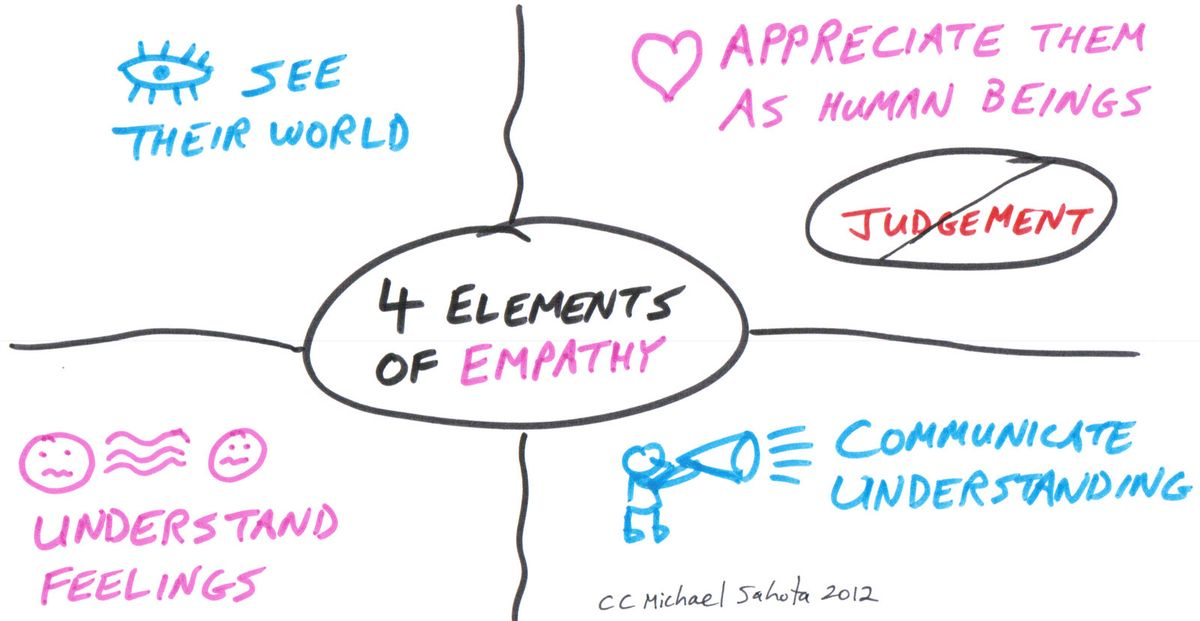
 I found this infographic which I think explains how we can show empathy:


Showing empathy is trying to imagine what the other person is going through, and endeavouring to see their world how it is. You may not agree with the choices they've made or the circumstances they are in, but you cannot be empathetic if you are being judgemental. The person is a fellow human being and they are hurting. Talk to them and find out what they are feeling and actively listen to them. Ask questions but don't offer advice unless they request it.

You cannot ease another person's grief - it is a process they need to work through. You may be able to give some short-term solutions, but generally, the person will need to work their situation and deal with whatever that means.


Most human beings want to feel connected with other people. They want to know that other people understand or will try to understand their situation. Unfortunately, so many people are so preoccupied with their own lives that they often don't reach out to show empathy to others.

My challenge for you is to reach out to someone today who is hurting. You may just be the blessing they need. 

Monday, 19 March 2018

Blog 105 - World Down Syndrome Day Thoughts


Tomorrow is World Down Syndrome Day. A day close to my heart. A day I wish didn't need to be. If people born with Down syndrome, were actively accepted in mainstream schools and out in society, then there would be no need for this day, which aims to create awareness of the awesome lives people with Down syndrome live.

So many people hold archaic views of what a person with Down syndrome looks like, what their intelligence is, what they are able to do or not do, and the way they should live. Even though people with Down syndrome, with the help of advocates, are now being seen doing ordinary things and living ordinary independent lives, preconceived and prejudicial attitudes still prevail.

My daughter Jessica has opened many adults' eyes to what is possible and I have seen a change in their perceptions of what the label Down syndrome means. What bothers me at the moment is the attitude of some other children towards Jessica.  In the school playground they don't see her uniqueness as something to be embraced. They see her as 'different' and maybe even 'weird'. I so wish I could change the lenses of these children and make them see Jessica as the rounded child she is. Yes, there is no doubting that she has an intellectual impairment, but she is kind-hearted and wears her heart on her sleeve; and she has feelings and passions. Jessica is so incredibly imaginative and loves music and drama. When she sings, it is not 'funny', it is the joy she feels and is expressing. My daughter has goals for her life like they do. And guess what? They are the same goals. I am thankful to the children who do take the time to say hi to her, play with her, help her, and accept her individuality. These children will be more caring and empathetic adults who are aware of other adults with disabilities.

This year Jessica was selected to be on the school's public relations team. She proved herself good enough to be a leader. There will be more moments to come this year, where she will again prove herself as equal to her peers. Hopefully this continual demonstration, will show the other children in her year level that she is like them in more ways than she is different.

And as I do daily, I as her mother will continue to show her she is loved and valued and perfect just the way she is. I will also continue to challenge society's attitudes, one person at a time.


Thursday, 7 December 2017

Blog 104 - My Interview on Channel Nine

I was contacted by Julie Cross, a journalist living in Sydney, who asked could she interview me and my daughter Melissa, about living with a craniofacial syndrome. This was related to the movie Wonder which is out in cinemas and creating a lot of interest in people living with facial differences. One of my friends, Olivia, had just done an interview with Channel Seven and it was tasteful and respectful, so I agreed, though with caution. Why was I cautious? Because I've had bad experiences with the media in the past. Now I must say that the awful experiences were ten years ago and were magazines, who wanted to exploit us for their own publicity. I have been in the local newspaper on numerous occasions since, and on Channel Nine, and all was fine.

I did tell Julie my concerns and asked that she be respectful, which she was. She stated the facts and what myself and Melissa said.


Click on this link to go to the article:


I have outlined some experiences from my past, and my children's operations in the early days of this blog, so I won't go back over them now. But I must say we are fortunate to be living in Australia where surgeons are expert at helping people born with craniofacial syndromes. And we have a free public health system so all children are able to access the health services they need.

I am conscious that this is not so in many countries around the world.

Even though adults and kids are often mean to people living with facial differences, as my daughter has alluded to in the Channel Nine interview, I believe that today's society is more compassionate and respectful. My children have generally been more accepted than I was and have not suffered the same degree of bullying that I did. There is obviously still more to be done, but there always needs to be more done for people living with disabilities or any type of difference.

When I was growing up Graham Kennedy, a renowned Australian comedian and entertainer, was my role model; the only person I knew who had my syndrome, and I would watch him every night on Blankety Blanks so I could see someone else a little like me.  I was also told that Marty Feldman, an English comedian, had Crouzons as well.

It wasn't until the movie Mask came out in 1985 starring Cher, that there seemed to be something with substance to watch. This movie created awareness and Cher became the patron of the Dallas Craniofacial Unit. and is currently the national spokesperson for the Children's Craniofacial Association.The movie Wonder will also make a chink in the wall of the current barriers and ignorance.

If you liked Wonder, then I have an Australian version aimed at teenagers. I would love support for my book. See below for the Kids Book Review review.


Ride High Pineapple is available from me, my website and from many online bookstores.
See my website for more details:


Monday, 27 November 2017

Blog 103 - My Thoughts on Wonder the Movie

 
My Thoughts on Wonder the Movie

Last Wednesday night, November 22, my friends took me to see the movie Wonder. I had read the book Wonder by RJ Palacio that the movie was based on, so was interested to see the screen adaptation. I must admit to being nervous and I'd bitten off all my fingernails waiting for five o'clock to arrive, when my friend Tracey picked me up.

Earlier in the day I'd posted on Facebook my nervousness about going to see the film. Another friend who knows myself and what my two children have been through, told me he thought it would be okay for me, except maybe for the bullying. After seeing the movie I was thankful for his warning as he was right.

What exactly was giving me anxiety? Was it a fear that there would be a poor or disrespectful representation of people with craniofacial syndromes? Was it that I wouldn't like the film as I had concerns with some of the parts of the book?/ Was it that it would trigger flashbacks to my childhood? Maybe all of these combined. I am unsure.

At the end of the movie, I sat and reflected on what I had seen. My overall immediate opinion being that it was  tasteful and respectful. There were many elements of truth throughout the movie, and I thought the movie would go a long way in creating awareness of craniofacial syndromes.

Many people in the craniofacial world, including myself have commented on Jacob Tremblay being cast as the child actor to play Auggie, and the fact that he didn't have Treacher Collins (the craniofacial syndrome that Auggie had). Many people, myself included, thought the actor should have been born with Treacher Collins, until I found out that the agency did try to find a child with TC but it didn't work out. And when I thought about the movie. It would have been very difficult emotionally for a child with TC to play Auggie, particularly if the child himself had experienced bullying in school.

So let me tell you my other thoughts in no particular order: (spoiler alert if you haven't seen the movie)

* Jacob Tremblay's portrayal of Auggie was very good. He was sensitive to the role, and brought character and a wholeness to Auggie. The film showed that a child isn't just a face. In the film Auggie has a Star Wars obsession, he has a dream to be an astronaut, he is intelligent and the best kid in Science, and he is funny (he has spunk). Jacob also portrayed well Auggie's roller coaster psychological and emotional states which being different creates,

(This link explains Jacob's transformation for the role, and how he prepared for it. It also has the 20/20 interview, with Nathaniel who has Treacher Collins and remarkably has many traits in common with Auggie. Nathaniel was considered for the role but it didn't work out, and his family had an input into the filming. Jacob Tremblay Interview + Wonderboy: a story of transformation)

* The film gave a glimpse into the world of operations and hospitalizations that can happen. Auggie had 27 armbands stuck on a pinboard. Now I always threw our armbands away and when I asked my children about whether they would display their bands like that, their responses were a resounding, 'No!' But having the visible display in the movie emphasised what a child may go through.

*Auggie talked about the stares he endured everywhere he went. For eighteen years, until my final operation, I was stared at every day. My children have also been stared at from the moment we took them home from the hospital. Every time we were out and about adults and children would stare at them and make comments. They are now in high school and although they've had many operations and do not look as severe as they did when they were little, they are still being stared at. My eldest daughter told me tonight when we were discussing this, 'You'd think I was an alien the way I'm treated. I am stared at and ignored.'
Being stared at for looking different is tiresome. You just want to blend in and be like everyone else.

* I loved the little girl Summer who sought out a friendship with Auggie. She  saw past his face and wanted to know the boy. That made me smile as it reminded me of my son who throughout his life has had girls seek him out to be friends with.


* I liked Jack. Jack received a scholarship to go to the school and I suspect was on the outer at times. He went against his friendship with Auggie and said cruel things to the popular group (with Julian the bully) when he didn't think Auggie was around. He obviously did this to fit in. I have seen this happen as a teacher. Though not nice, it happens. I also liked that Jack saw the error of his ways and made amends. If anything I thought Auggie was very quick to forgive and forget Jack's cruelty but maybe he understood why Jack did it, and he liked Jack. Again as a teacher, I have seen children be worst enemies one day, and best mates the next.


* Julian and his mates did a great job at being bullies. The bullying was the only thing that triggered a gut reaction in me. I didn't cry at all throughout the film as I had lived it in so many ways three times over. But the bullying, the verbal and physical, which I experienced growing up, triggered memories for me. That was good because that meant the movie was authentic.
Mr Tushman the principal in the movie did not tolerate the bullying which I liked. In my day no one stopped the bullying, even though they knew it was happening. Even though my mother was a teacher at my school, the bullying was daily. My children's teachers were pretty good at dealing with bullying in primary school. Maybe because I was a teacher at the school as well - I very closely monitored any incidents and the children in the school knew Melissa and Nick belonged to me. I talked to the children in my classes openly about them.


In the movie, as was in the book, there is a situation where Julian displayed their class photo with Auggie photoshopped out of it. It turned out that the mother did the photoshopping and she wasn't happy about having Auggie at the school. Now when I first read the book, I thought this was a bit far fetched, as I couldn't see any of the parents I knew doing that, but upon asking the craniofacial community in the USA, I was told it was highly likely to happen. I liked in the movie that the principal backed Auggie, and stood up to the bully parents. This is what all principals need to do for any type of bullying.

*Via, Auggie's older sister who often felt left out and that her parents' attention was always on Auggie also hit a nerve with me. In the movie, Via also didn't always want to be connected to her brother because the attention it created. My older brothers have been deeply affected by having me as their sister. I am positive they felt the exact way as Via. One of my brothers does not talk to me anymore, and the other has told me matter-of-factly how he hated spending time in waiting rooms and all my father's attention being on me. I'm sure they got sick of having to stick up for me and being associated with the girl with the freakish face. They did not have a normal childhood like their friends did. Shame that I couldn't help it and I was the one dealing with everything. And yes my parents were extremely proud of all my achievements, but I know they were also proud of my brothers' as well. They were definitely supported. Something my brothers didn't need to do as they were born with normal faces, was fight to show the world they could achieve as I had to do; and my parents had to fight the world to show I was worthy of being involved in the community and leading an inclusive ordinary life.


*There was a fight scene where Auggie was being bullied and Jack punched Julian. There was also a physical fight on the Field Trip which I won't comment on because I am unsure whether a bully (Julian's best friend) would actually stand up for the victim (Auggie) he'd been terrorising. But the fighting between Jack and Julian, was realistic for me. My brothers were often in physical fights over kids calling me names, and I too was physically pushed over in primary school. I remember my best friend Diane in high school standing up for me often. Auggie stepped in and fought his bullies in the end - that is something I never did. I always turned and walked away. I found boys were the worst at bullying when I went through school. For my daughter, it's been the girls.

*  The film showed how a family unit pulls together when life gets tough. It showed parents' unwavering love for their child. It showed that parents often put on hold things they want so they can be there for their child. In the movie Julia Roberts' character, Mrs Pullman, put on hold her Masters thesis while home schooling Auggie. I went back to work full-time when Melissa was three months old and Nick was seven months old, and worked around my children's operations. I really don't know how I did it. My three children have had 25 operations between them. When Melissa and Nick were little, my principal was not at all supportive and would go mad at me because I was having time off. Some parents as well were not supportive of me having time off to be with my child. These people had absolutely no clue the amount of stress each of those cranial and facial reconstructions caused on a parent, and that I was firstly a mother, and no way was I going to miss being by my children's sides.
I have a vivid memory of having just gone through one of Nick's major skull expansion surgeries, and on our way out the ward, the surgeon stopped us and said Melissa would be operated on the next day as there had been a cancellation (there was to have been a two week break between them, and Melissa's would have been in the school holidays). You don't say no to the surgeon when told this. I rang my principal and he went off his brain at me and I was inconsolable. Nick had been isolated with suspected meningitis and he hadn't been sleeping well. I was a complete mess from the stress, lack of sleep and no outside support (it was just my husband and myself). I told the kids' neurosurgeon and his reply about my principal was, 'He needs to come and see what you are dealing with.'

In the early days we had very few visitors. The people I thought were our friends were nowhere to be seen, and my mother who couldn't cope with anything Crouzon related, stayed away or babysat. (My father passed away after Melissa's first surgery. He was my rock during that time.) It was so upsetting to us - it made us feel like we were insignificant. It was only when we joined a church that finally people supported us. Maybe  people just didn't understand - we were living in an alternate dimension I guess.

* Owen Wilson played Mr Pullman, Auggie's father. He hid the astronaut helmet Auggie wore often to hide his face. Mr Pullman said he did it because he missed Auggie's face. My daughter tonight told me that I keep telling her that there is nothing wrong with her face, that because I see her all the time I don't see her big eyes or her flat face... but that she sees it every day in the mirror. And I guess she is right. I see my beautiful daughter, not how much her face has changed since her RED halo surgery.
The only commonality between Auggie wearing a helmet and our life would be the wearing of sunglasses to hide our eyes, or putting a blanket over the pram when they were babies. Never did the kids wear masks.


* I would have to say the thing that bothered me the most was the ending. Auggie won a medal for being a strong person, a good person. It was the final award for the night. Why didn't he receive an academic award for Science when he was always the one with the answers and built the best Science project? It seemed to me that the token disabled person had to be rewarded. In my world that didn't happen. My daughter in particular would go for leadership positions with the regular children and be knocked back. She tried and tried to show people she was more than how she looked and could perform the duties, and she would end up in tears and disappointed, despondent with life and people. It always seemed to be the popular out-there kids who got the positions over and over again. Both my children did receive Children of Courage awards outside of school, presented by the Lions Club, which I don't think they really liked or wanted, but at the time I think I wanted it for them, as recognition of the tough journey they'd been enduring. Maybe this is what the movie was trying to aim for.

*

So overall I have to say I would encourage people to go and see the movie. My children are not going to see it as it doesn't interest them, but I know many children who have craniofacial syndromes have gone to see it.

Please remember that every child with a craniofacial syndrome has a different journey and different experiences, though many have endured surgeries, stares and comments (if not bullying).

The movie promoted being kind to people who are different, not judging a person by how they look and the importance of getting to know the whole person. This of course extends way past facial differences, to race, weight, identity, sexuality and disability.